
No 3D, meet 3D.
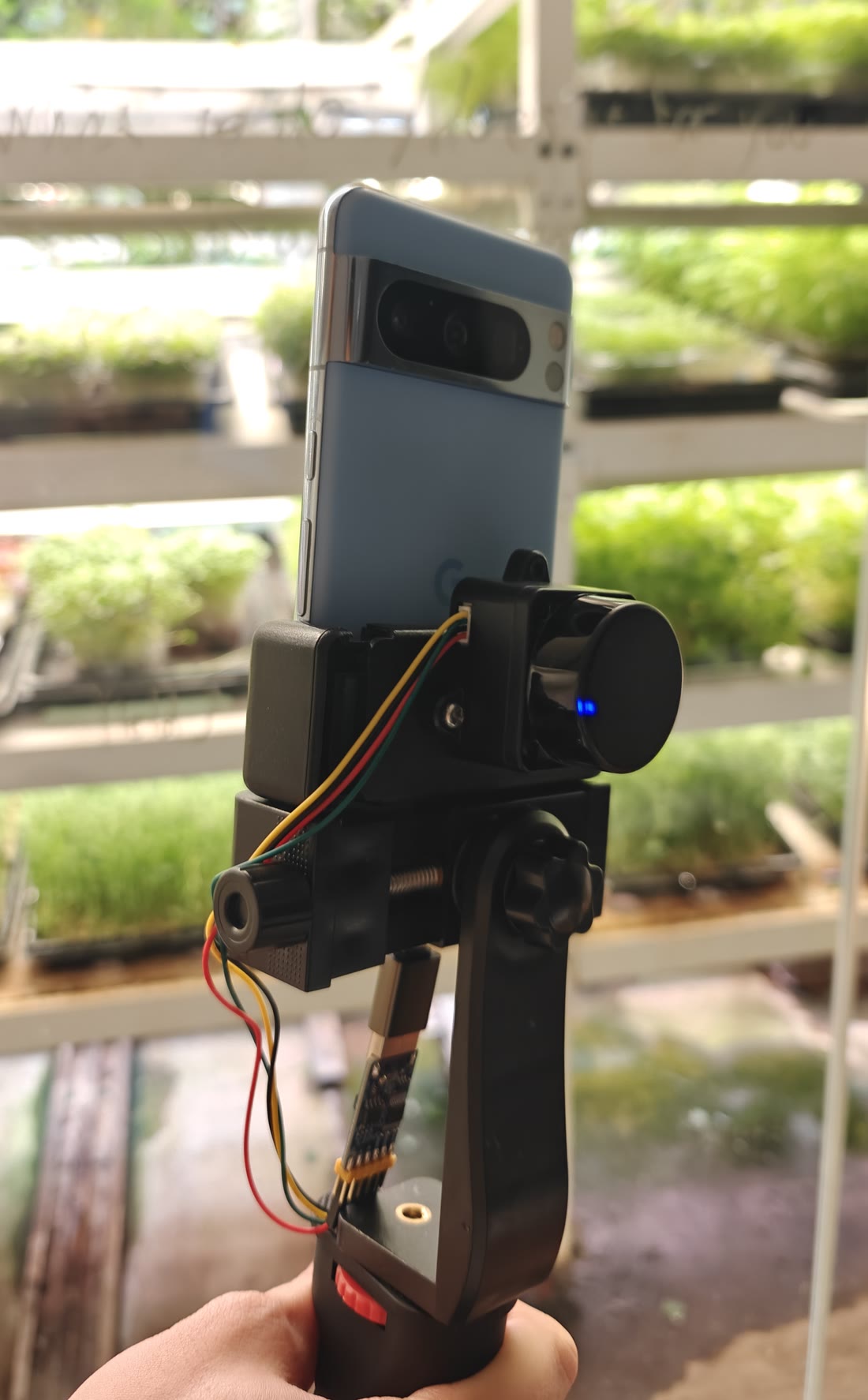
Ollidar turns a cheap 2D lidar into a 3D scanner, using the phone already in your pocket. Compatible with ROS1 & ROS2, Android — available on GitHub now. Open source.

The lidar knows what it saw. Your phone knows how it moved. Together, that’s 3D.
A side project from our farm robots, for anyone who wants a 3D scanner for the price of a robot-vacuum lidar.
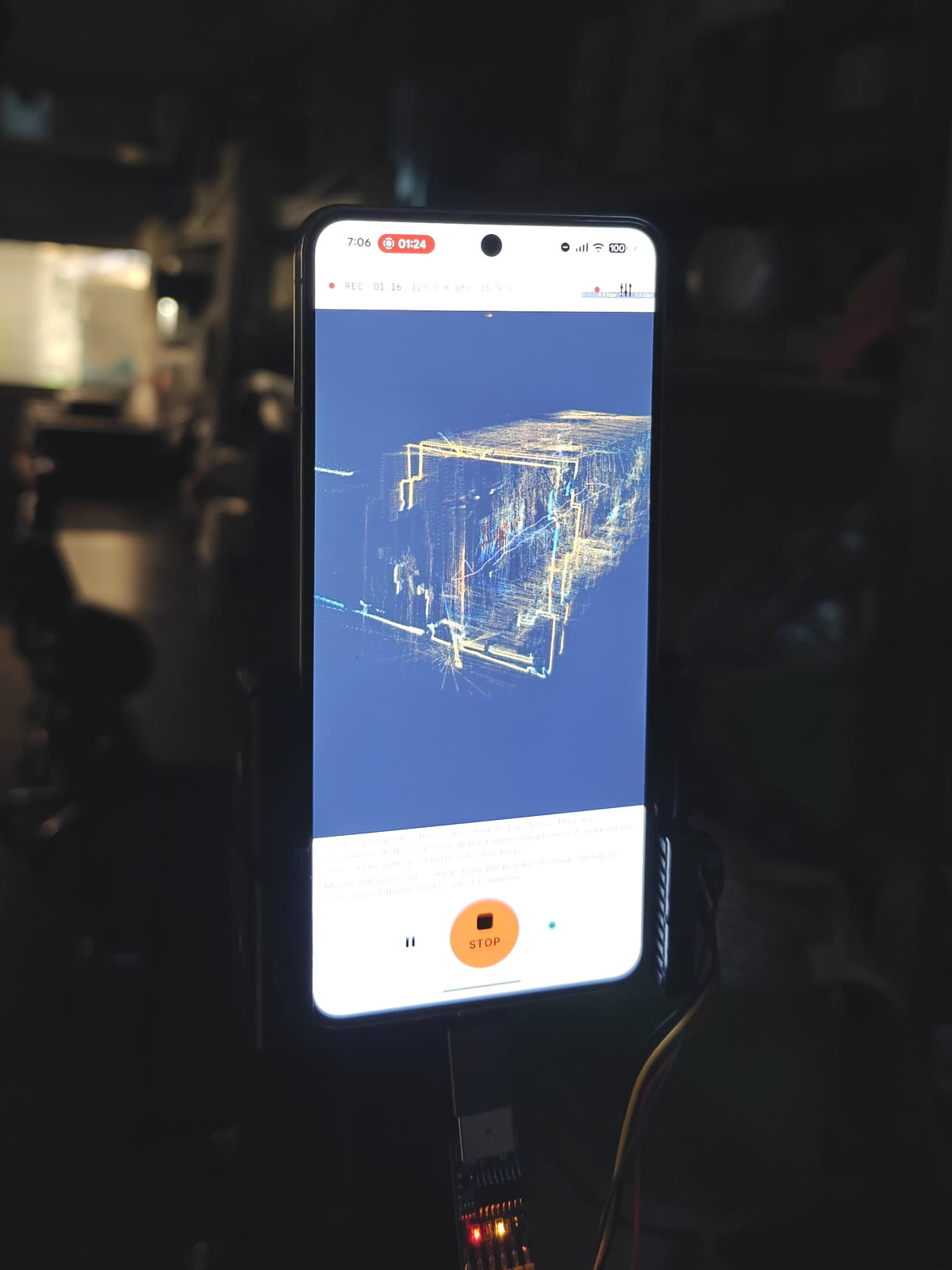
Not a grower product — the farm products are here →Plug a robot-vacuum-class lidar puck into your phone’s USB port, press scan, and sweep. The app fuses the phone’s IMU with the lidar’s 2D scan plane and assembles a 3D point cloud. Desktop apps for macOS, Windows and Linux handle processing, viewing, and export — in formats that open straight in ROS, CloudCompare, Blender, and QGIS.
-
Survey-grade handheld.What survey crews carry. Consumer handheld SLAM scanners sit below, at $1,699.$12,499 – $60,000
-
Ready-made 3D lidar.Street price for the popular unit. The cheapest 3D lidars start at $249.$900 – $1,350
-
New hobby 2D lidar.Ready to buy, well documented — and still two-dimensional.$76 – $141
-
The puck Ollidar runs on.Robot-vacuum class. The one sensor supported today, over USB.~$35
3D scanning for the price of a vacuum-cleaner part.
Which buys a classroom a set of 3D scanners for what one commercial unit costs.
Read as multiples: ready-made 3D starts at roughly 6–18× the hobby-2D band, and handheld scanners run 12× to 800×. Ollidar’s hardware bill sits below the whole ladder.
Exactly one company ever sold a 2D→3D conversion kit — in 2017, for $700 all-in. It folded within a year, and the niche has sat empty since.
Not a survey scanner. The difference between no 3D and 3D.
BETA — HOBBY-GRADE, AND SAYS SOThis is a beta, and an honest one. Expect hobby-grade accuracy: centimeter-class at room scale, with visible drift on long sweeps. Short, closed loops beat one heroic pass.
Range is ~12 m, and it keeps working outdoors — where phone-based scanning apps struggle. Harsh noon glare will still cost range.
We publish real scans instead of promised numbers.
Built by the Agtom team while developing agricultural robots.
Released free and open, because the people who most need 3D sensing — students, researchers, hobbyists, robotics developers — are the ones least able to pay for it.
-
NOW · BETA
Android capture and desktop processing, one supported ~$35 puck over USB, and PLY, LAS and PCD export.
-
NEXT
A standalone module — microcontroller plus a budget IMU, no phone needed, mountable on robots. And more pucks.
-
YOU TELL US
The community steers what ships next.