
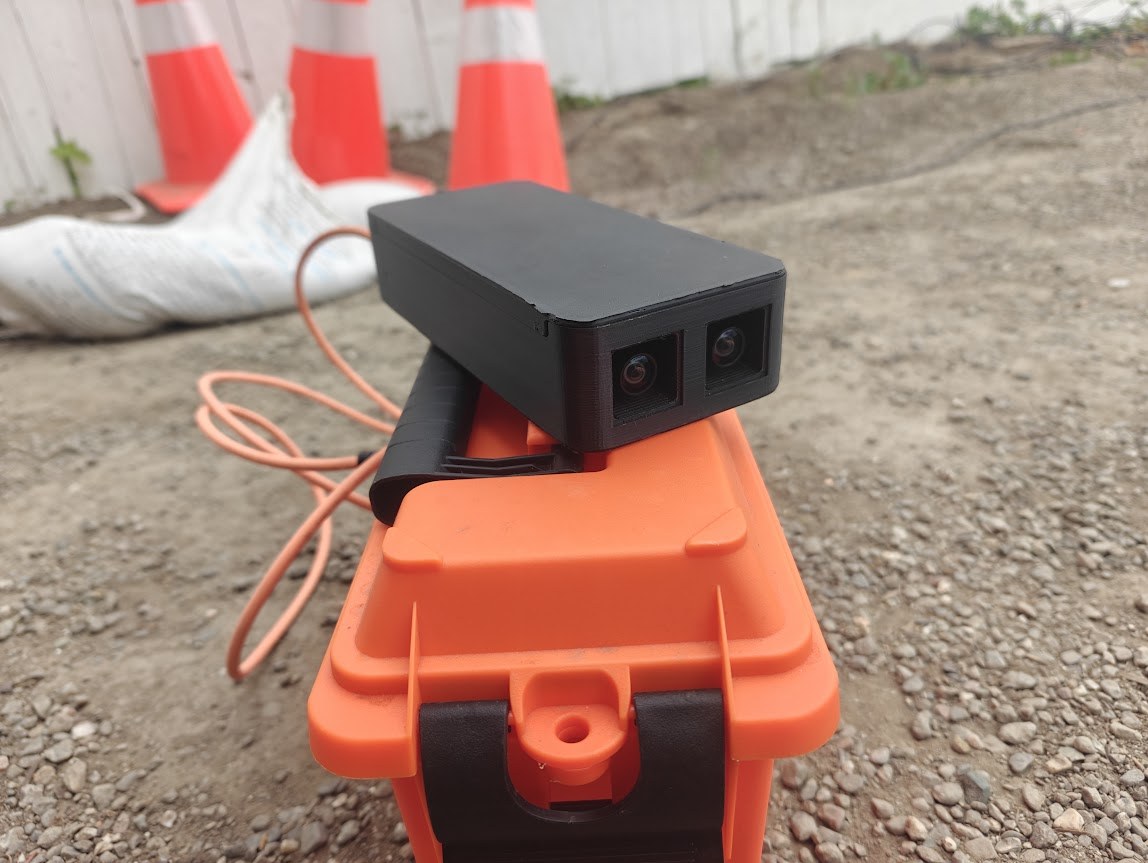
One clock for every sensor, and no reading trusted alone.
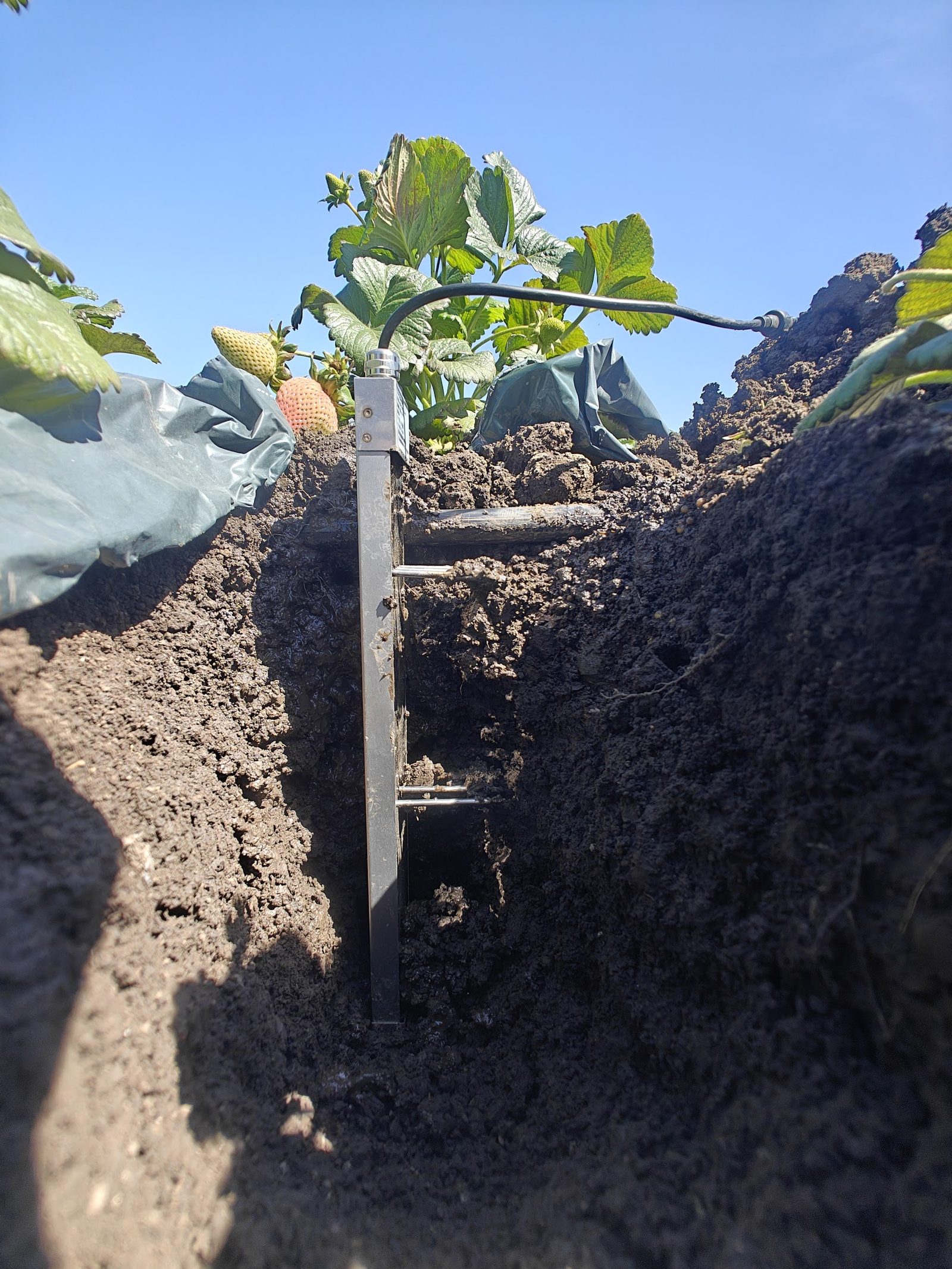
Cameras on the canopy, soil-moisture probes at 5, 15 and 25 cm, a soil-gas node and a weather station — our own designs, on one clock, so any two readings compare second to second.
Green is running on the block today. Amber is what we’re building — in public.
Agtom builds its own senses. Cameras read the crop — vigor, color, heat, structure. A node at the bed surface reads the soil's breath. Different physics, one habit: every reading lands in the same data layer, on the same clock, for the same agents to read.
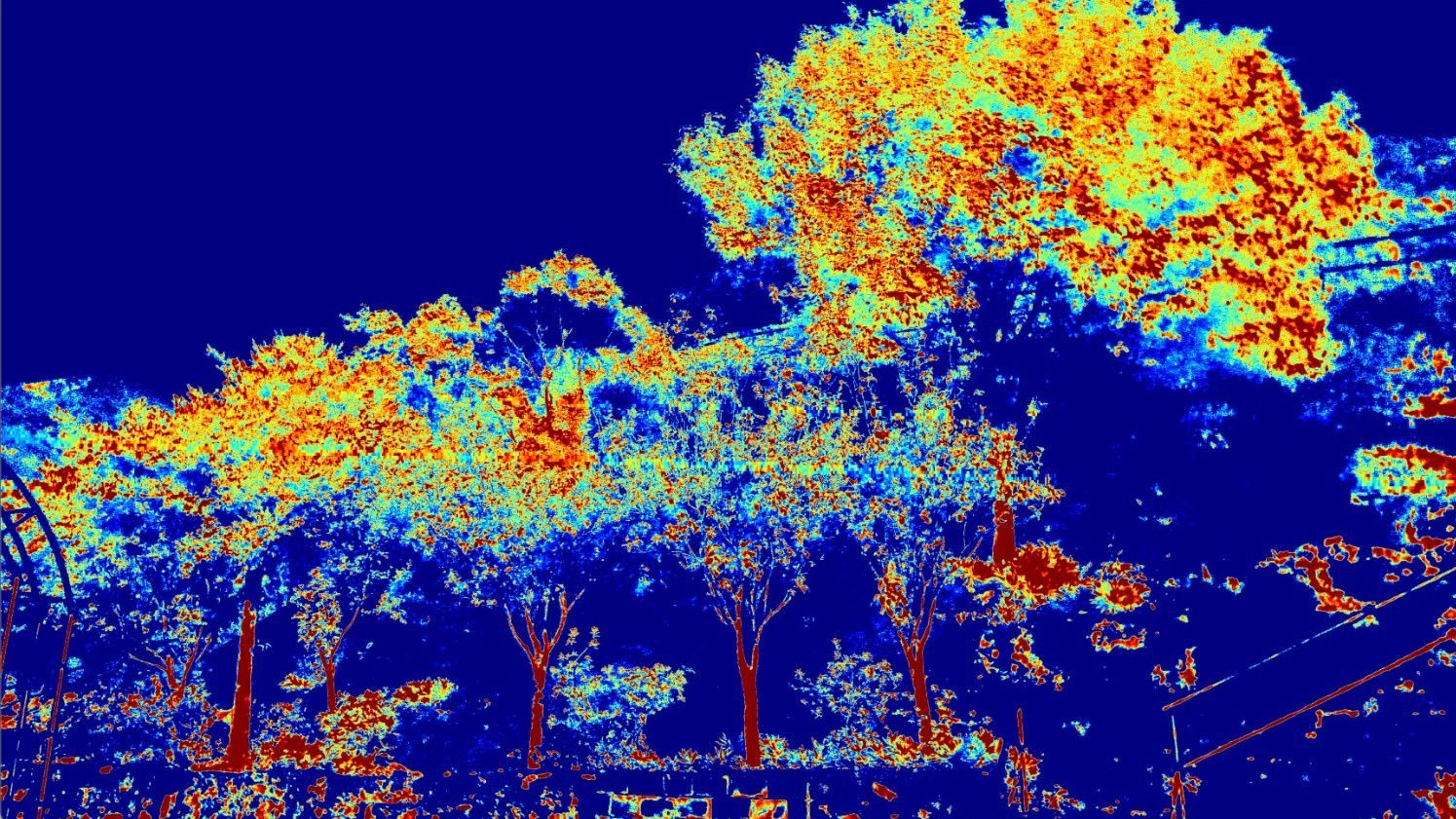
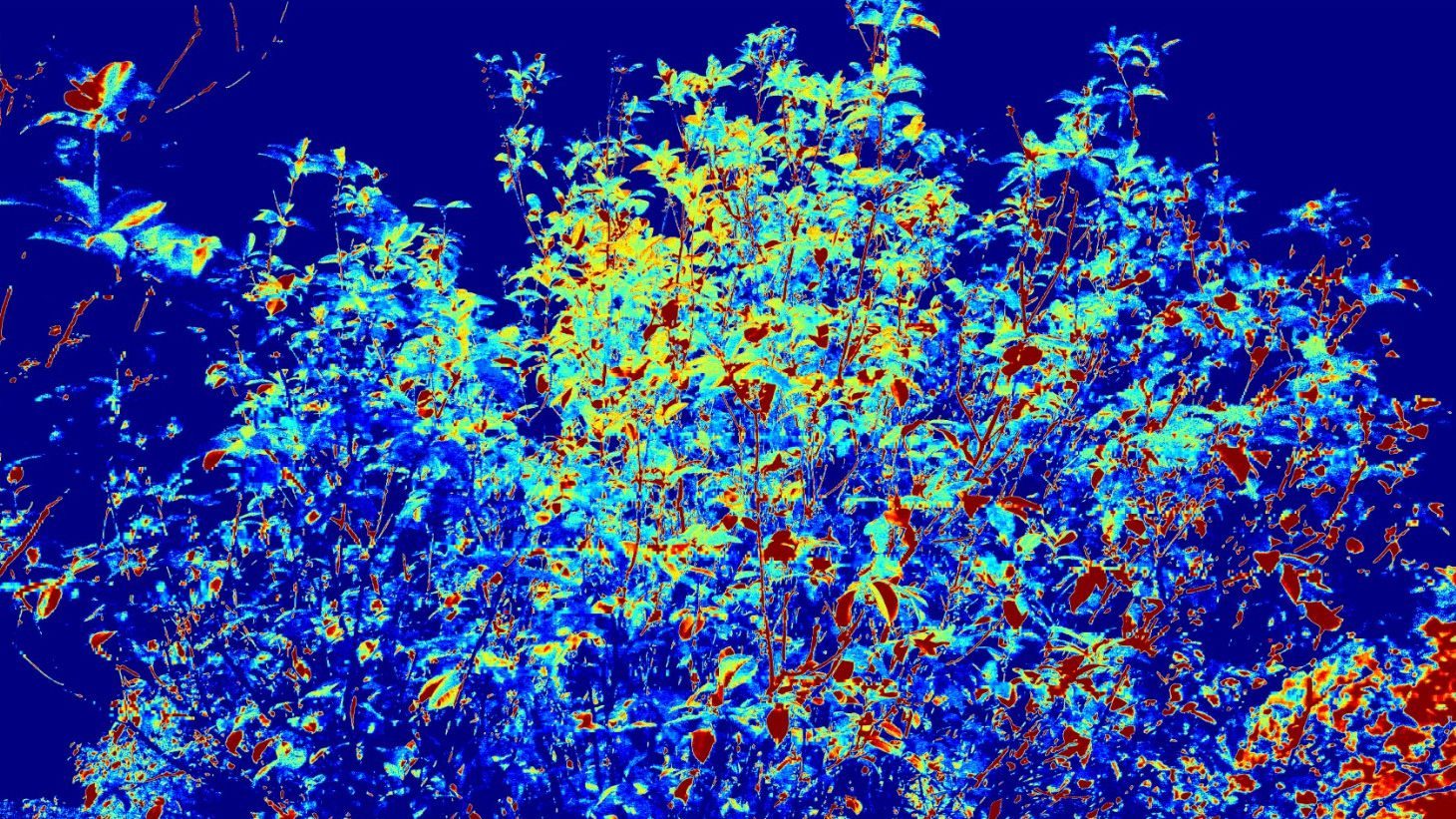
Canopy vigor, live at thirty frames a second.
Stress shows in NDVI before it shows to the eye — trouble surfaces while it's still small.
Color, shape, counts.
The base record of every plant: weeds, fruit, lesions, stands.
Canopy temperature.
A stressed plant runs warm — water stress shows warm before it shows wilted.
Close-range structure.
Plant size, growth rate, fruit sizing — and the rover's own eyes on the row.
No hero sensor — each layer reads a signal the others physically cannot, and the value concentrates where they fuse: same plant, same moment, same clock, one AI, on the farm.
Permanently mounted on a pole over the block, or riding Franky through the rows — the same senses, either home.
Soil breathes — carbon dioxide from roots and microbes, volatile organics from the living community, rising and falling with heat, moisture, and the work of the day. A small node at the bed surface reads that breath continuously — something lab snapshots taken weeks apart can never see. What we watch for: the rhythm of a healthy day, the pulse when irrigation lands, the soil's answer to a feed. A signal we're learning to read, in public, season by season.
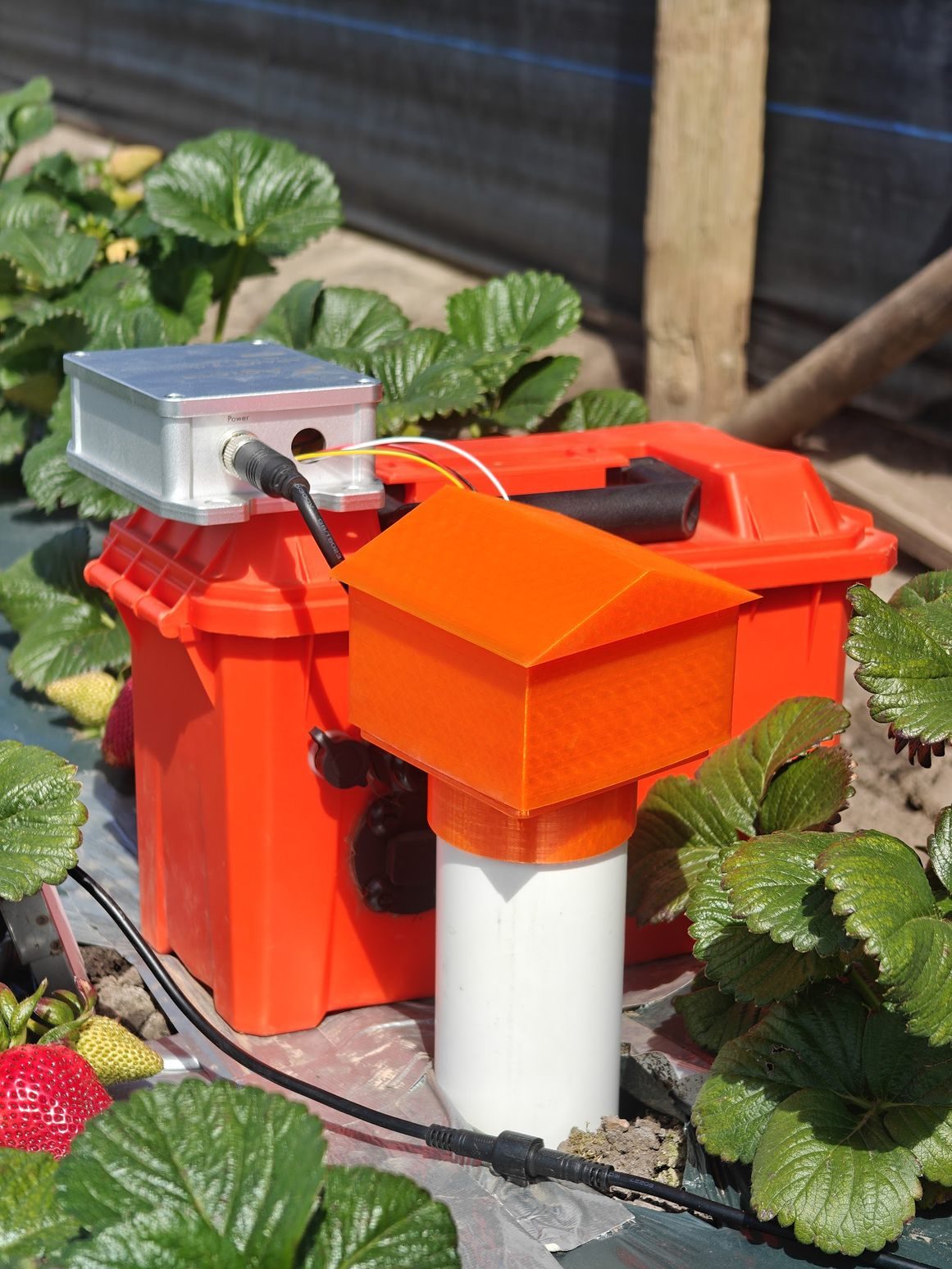
Every reading lands on one clock, so the layers can agree — and three layers agreeing is signal, not noise.
THE MULTI-DEPTH PROBE IN THE TRENCH — SOIL AT 5, 15 AND 25 CM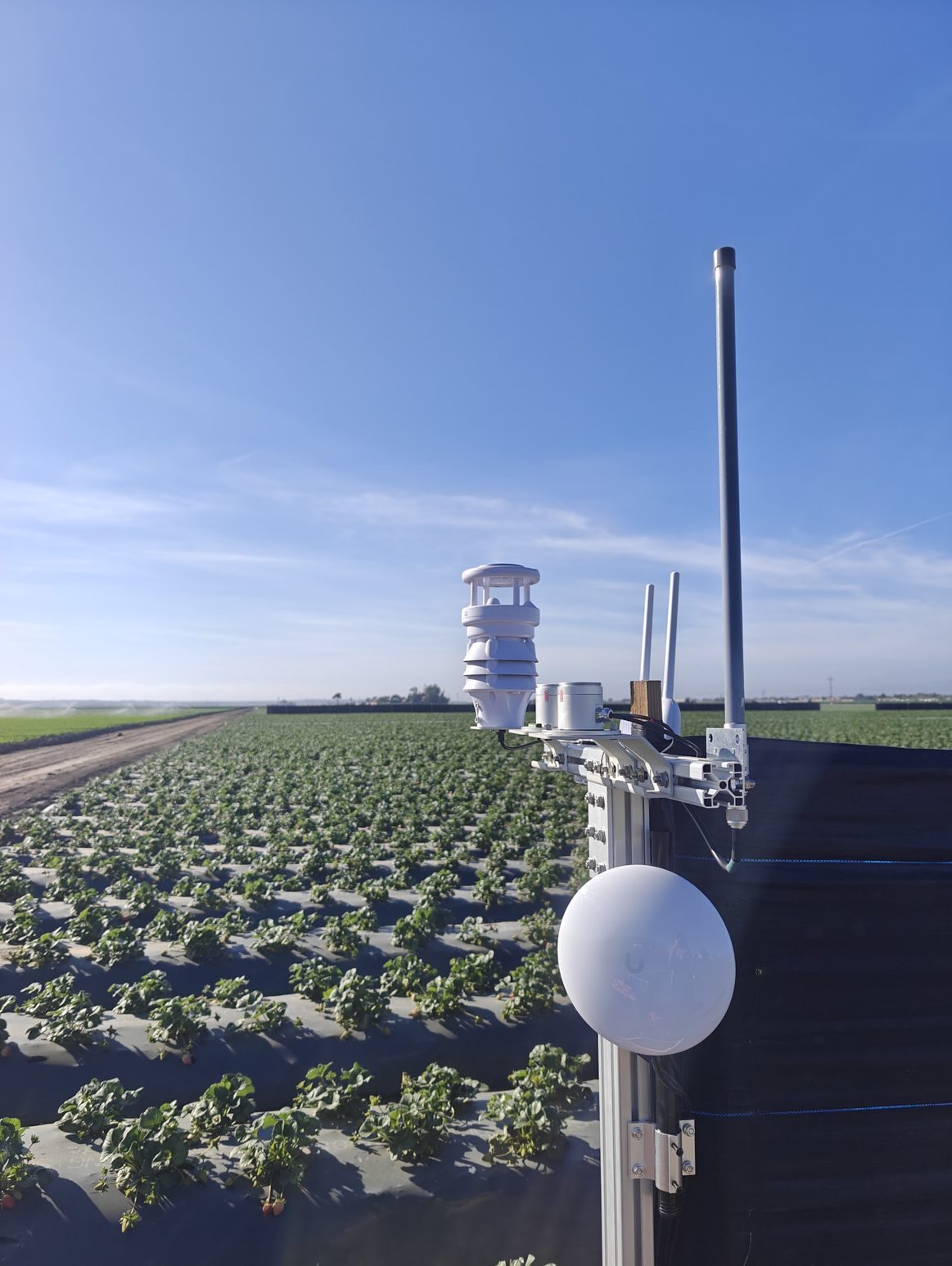
Crop water demand, computed on the farm every hour.
THE STATION OVER THE BLOCKA stressed plant runs warm, reads dark, drinks oddly — the senses catch it while it's one plant, not one block.
The first sign is a plant that already looks wrong.
The first sign is a reading that drifted, days earlier.
The block gets what the schedule says.
The block gets what its own weather says it used this hour.
Applied water is whatever the timer says.
Applied water is flow, pressure and soil response, agreeing.
One person, one probe, one afternoon.
Every sensor on the block, every five seconds, day and night.
·